> First Edition · 2026
The Forge
of Tongues
22,000 Years of Migration, Mutation, and Memory
A Y-chromosome string is a book. Twenty-two thousand years long. Each mutation a chapter. Each transition — from R to R1, from R1b to R1b-L21 — marks the moment a single man experienced a copying error that passed to his sons, and their sons, in an unbroken chain stretching from a campfire on the Pontic-Caspian Steppe to a kitchen table in Texas.
The Forge of Tongues decodes that chain. It places the Ross clan's genetic record alongside the Irish Lebor Gabála Érenn — the Book of Invasions — and asks a question historians dismissed for two centuries: what if the tradition remembered the journey correctly, even when it invented the names?
46
Chapters
10
Parts
12
Appendices
303K
Yrs Traced
>The Central Argument
The DNA and the Tradition Point to the Same Journey
The Irish Lebor Gabála Érenn — compiled by monks between the 7th and 12th centuries — says the Gaelic ancestors came from Scythia, moved through Egypt, passed through Spain, and invaded Ireland. For two hundred years, historians dismissed this as medieval flattery. A prestige genealogy. Monks connecting their patrons to ancient civilisations.
The DNA disagrees with the dismissal.
Tradition says
Origin: Scythia
DNA confirms
DNA: Pontic-Caspian Steppe — same region
Tradition says
Sojourn in Egypt
DNA confirms
DNA: Eastern Mediterranean presence in Bronze Age
Tradition says
The Spanish route
DNA confirms
DNA: R1b-L21 passed through Iberia via Bell Beaker
Tradition says
Invasion of Ireland
DNA confirms
DNA: R1b-L21 arrived in Ireland ~2500 BC, near-total Y-chromosome replacement
"The tradition remembered the journey correctly even when it invented the names."
The probability that the named individuals in the traditional genealogy were all real historical people is less than 1%. The probability that the broad migration pattern the tradition describes is accurate: 70–85%. The gap between those numbers is where the argument lives.
>Methodology
Three Languages of Evidence
The Molecular Record
SNP mutations, haplogroup assignments, ancient DNA studies, population genetics. The backbone of the argument. Strongest for deep time (22,000 years), weakest for recent centuries. When the genetic evidence speaks, it speaks with molecular certainty — but only about lineage, not individuals.
The Oral Memory
The Lebor Gabála Érenn, medieval genealogies, king-lists, clan traditions. Written down between the 7th and 12th centuries from much older oral sources. Not history. Not fiction. A memory of migrations, distorted by time, dressed in biblical clothing, but anchored to real events.
The Written Record
Charters, annals, correspondence, legal records. Available only for the last 1,500 years — for the Ross family, only the last 800. The most precise evidence. The most limited in scope. Cross-checks the traditional genealogy where both tracks overlap.
Convergence is the strongest form of evidence this book can offer. Where [G][T][D] appear together, three independent tracks — molecular biology, oral tradition, and documentary record — point in the same direction. Where only one tag appears, the claim rests on a single leg and should be read accordingly. The book never pretends its weakest arguments are as strong as its strongest.
>Clan Ross History
The Ross Surname: Origin and Meaning
The Ross surname derives from the Scottish Gaelic ros — a headland or promontory, referring to the territory of Ross-shire in the northern Highlands. But the bloodline predates the name by millennia.
~2500 BC
R1b-L21 Arrives in Ireland
The Bell Beaker phenomenon brings Steppe-derived R1b-L21 lineages to Ireland and Britain. The male lineage of Neolithic Europe is replaced. The Gaelic world begins.
~500 AD
Dal Riata — The Sons of Erc
Erc mac Echdach leads the Irish kingdom of Dal Riata across the narrow sea to Scotland. His sons divide the territory. Loarn, the elder brother, takes the northern provinces. Fergus takes the kingship.
~850 AD
The Mormaers of Moray
Descendants of Loarn mac Eirc become mormaers (great stewards) of Moray, the most powerful noble line in northern Scotland. Their blood runs through the earls of Orkney, the lords of Galloway — and Macbeth.
1215 AD
Earl of Ross Created
Fearchar mac an t-Sagairt (son of the Priest) earns the earldom of Ross for services to Alexander II. The O'Beolan abbots of Applecross — descendants of Cenel Loairn — become the Ross earls. The surname is formalised.
1746 AD
Culloden — The Scattering Begins
The Jacobite defeat at Culloden triggers the Highland Clearances. Ross clansmen are scattered to Canada, America, Australia, and beyond. The diaspora carries the haplogroup to every continent.
2024 AD
The DNA Kit
A cotton swab, a plastic tube, a lab in Valencia. The result: R1b1a1b1a1a1e1a2a1. Seventeen characters that decode 22,000 years of patrilineal descent. The chain is still unbroken.
>Structure
Table of Contents
The DNA Kit
- The haplogroup string · R1b1a1b1a1a1e1a2a1
- What R1b-L21 means
- The M222 result
- The argument laid out
The Spine of Time
R → R1b (M343) · 303,000–22,000 years ago
- Ch. 1 — The Oldest Letter
- Ch. 2 — The Ice Age Refuge
- Ch. 3 — The Caucasus Crucible
The Steppe
R1b-M269 · 6,500–4,800 years ago
- Ch. 4 — The Yamnaya Horizon
- Ch. 5 — The King at Babel
- Ch. 6 — The Forge of Tongues
- Ch. 7 — Old Europe: What Was Lost
- Interlude: The Bone
- Ch. 8 — The Exodus Connection
The Western Branch
R1b-P312 to L21 · 4,800–4,500 years ago
- Ch. 9 — The Marker of the West
- Ch. 10 — The Pharaoh's Blood
- Ch. 11 — Niul and Scota
- Ch. 12 — The Bell Beaker Conquest
- Ch. 13 — The Tower of Breogan
- Ch. 14 — The Rathlin Dead
The First Kings
R1b-DF13 · c. 2000–500 BC
- Ch. 15 — The Sons of Mil
- Ch. 16 — The Erainn
- Ch. 17 — The Bull and the King
- Ch. 18 — The Iron Age
The Nine Hostages
R1b-M222 · c. 400–600 AD
- Ch. 19 — Conn and Cormac
- Ch. 20 — The Nine Hostages
- Ch. 21 — The Genetic Proof
- Ch. 22 — The Sons of Niall
The Crossing
c. 500–850 AD
- Ch. 23 — The Sons of Erc
- Ch. 24 — Loarn: The Elder Brother
- Ch. 25 — Fergus: The Younger Brother
- Ch. 26 — The Usurpation
- Ch. 27 — Columba and the Church
The House of Macbeth
c. 850–1058 AD
- Ch. 28 — The Mormaers of Moray
- Ch. 29 — The Struggle for the Crown
- Ch. 30 — Macbeth: The Real King
- Ch. 31 — The Defeat
The Son of the Priest
c. 1100–1476 AD
- Ch. 32 — The O'Beolans of Applecross
- Ch. 33 — Fearchar: Son of the Priest
- Ch. 34 — Bannockburn
- Ch. 35 — The Royal Marriage
- Ch. 36 — The Fall of the Earldom
The Scattering
1476 AD – Present
- Ch. 37 — The Balnagown Chiefs
- Ch. 38 — Worcester: The Chains
- Ch. 39 — Culloden and the Clearances
- Ch. 40 — The Declaration
- Ch. 41 — The Global Diaspora
The Pattern
R1b1a1b1a1a1e1a2a1 — The Full Sequence
- Ch. 42 — The Gift of Tongues
- Ch. 43 — The Serpent Thread
- Ch. 44 — The Sacred King
- Ch. 45 — The Elder Brother
- Ch. 46 — The Westward Drift
- Epilogue: The Tongue, Healed
>Inside the Book
Illustrations
Each part opens with an original ink illustration on parchment. Five original maps trace the genetic journey from the Pontic-Caspian Steppe to the Scottish Highlands.
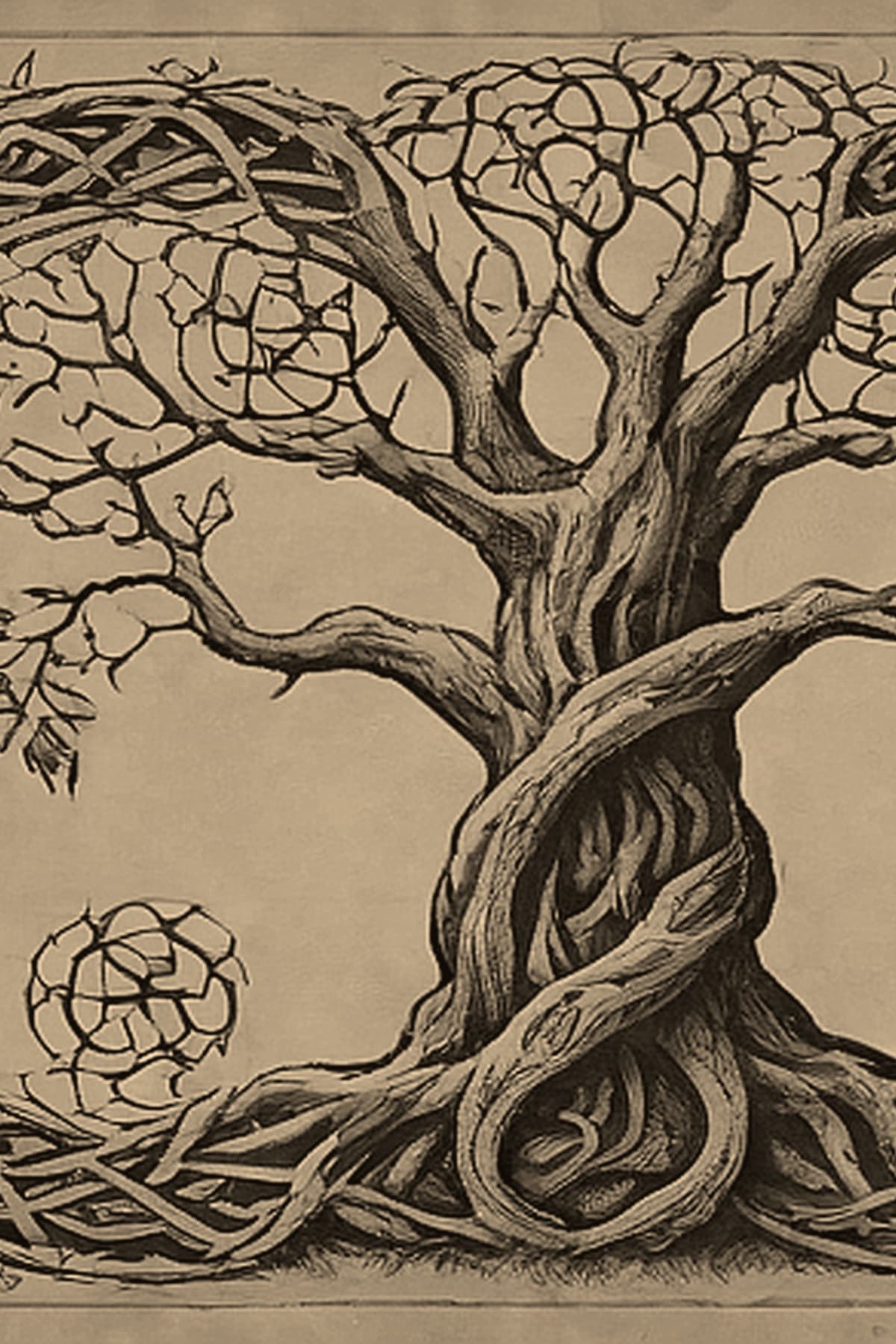
Prologue
The DNA Kit
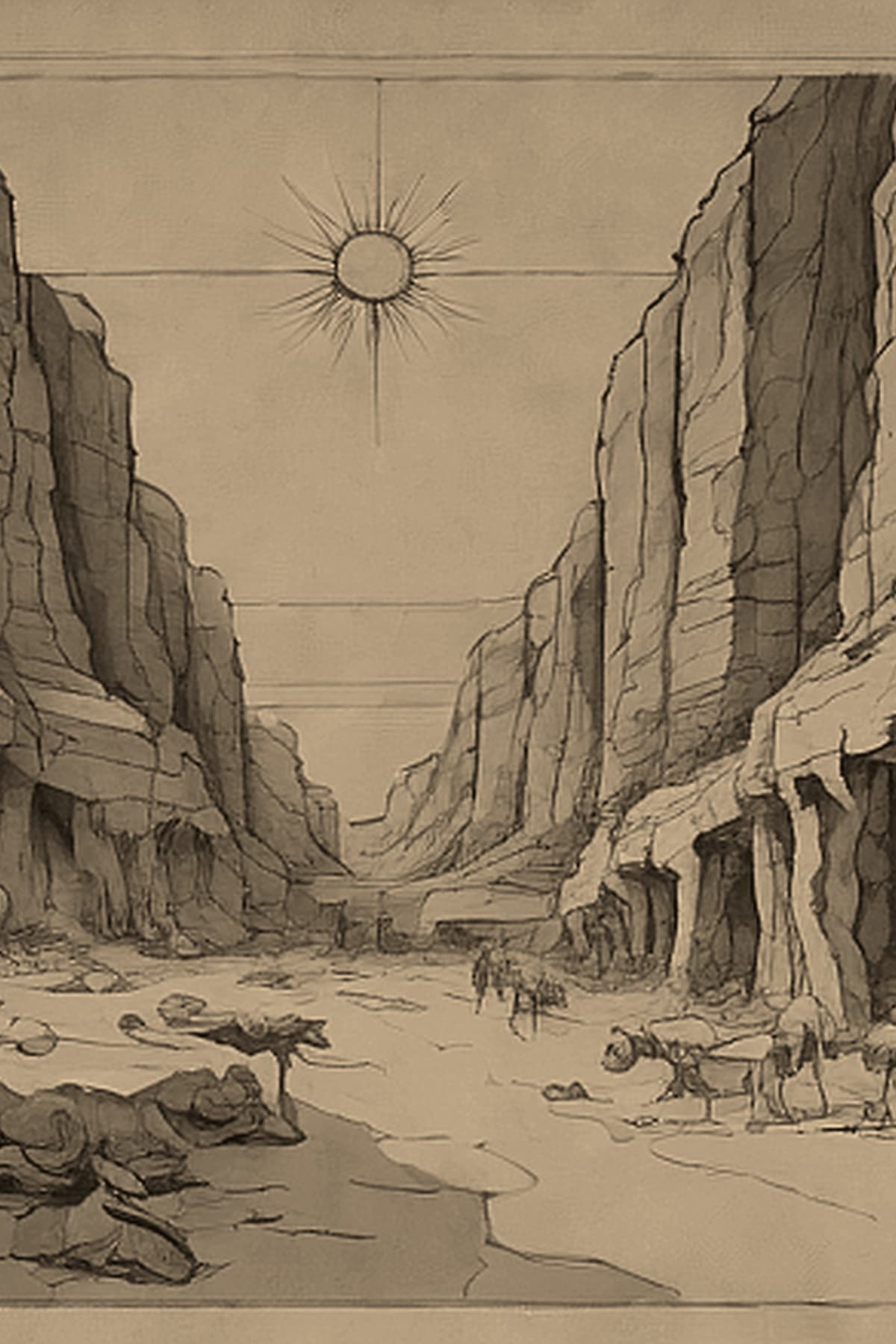
Part I
The Spine of Time
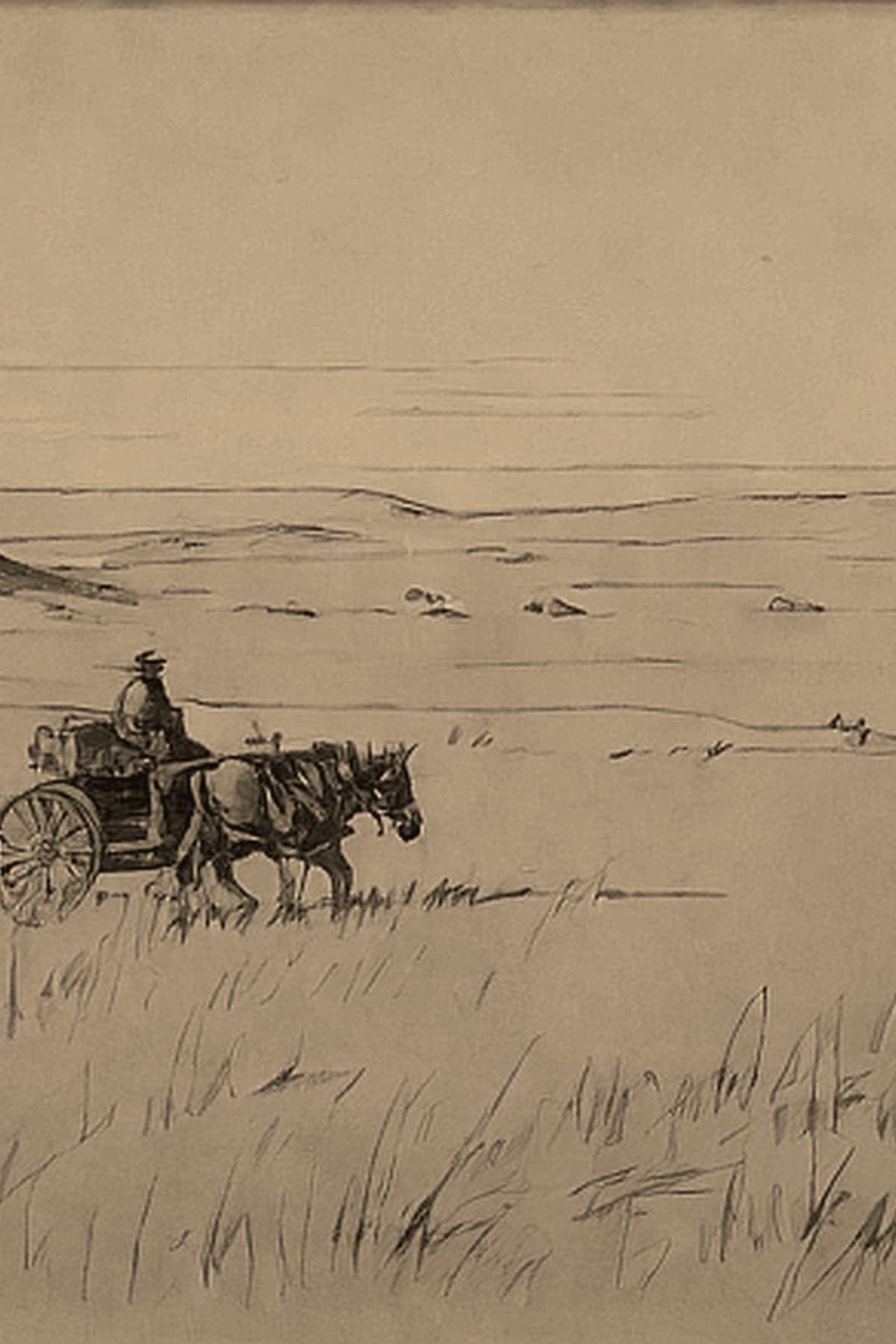
Part II
The Steppe
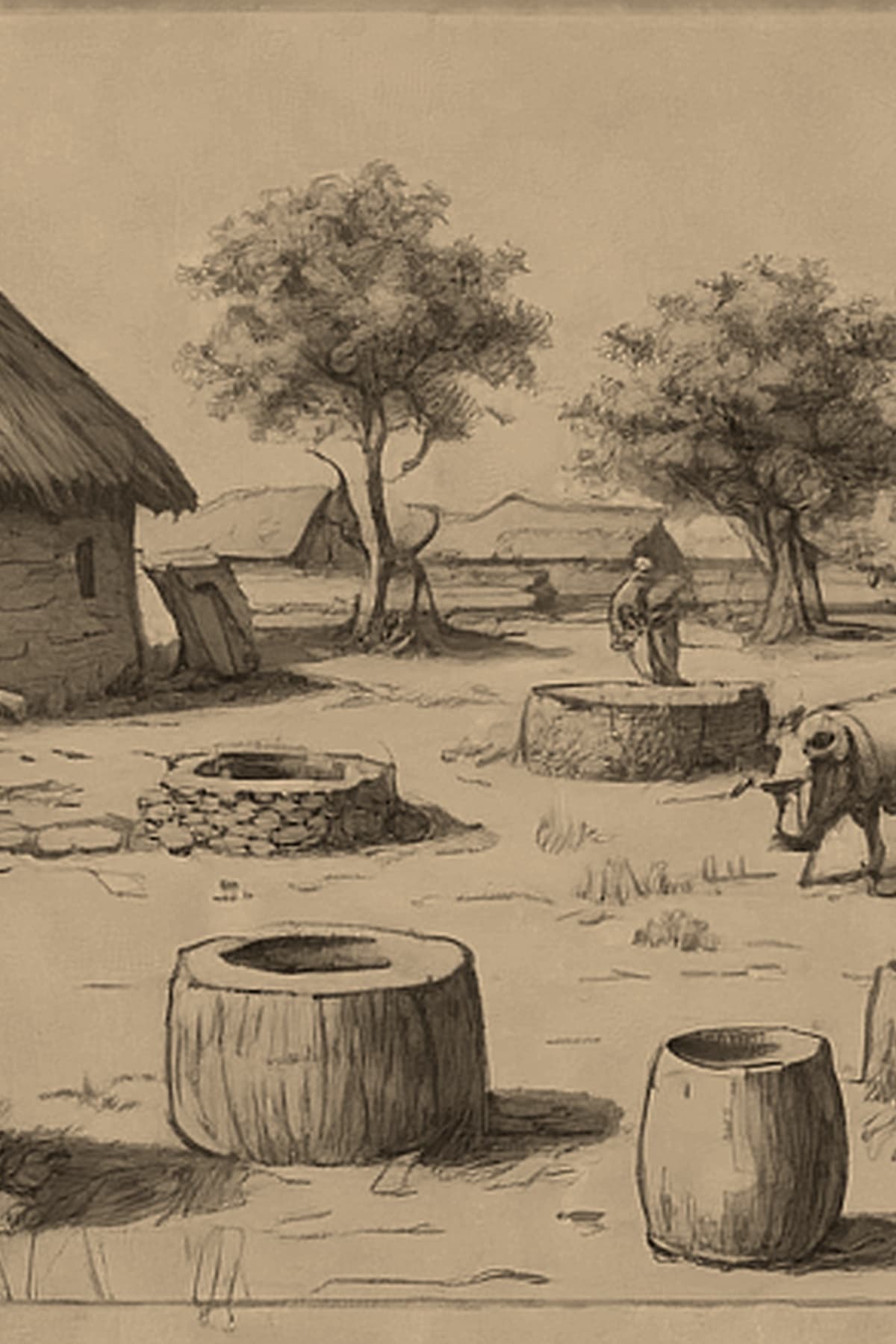
Part II
Old Europe
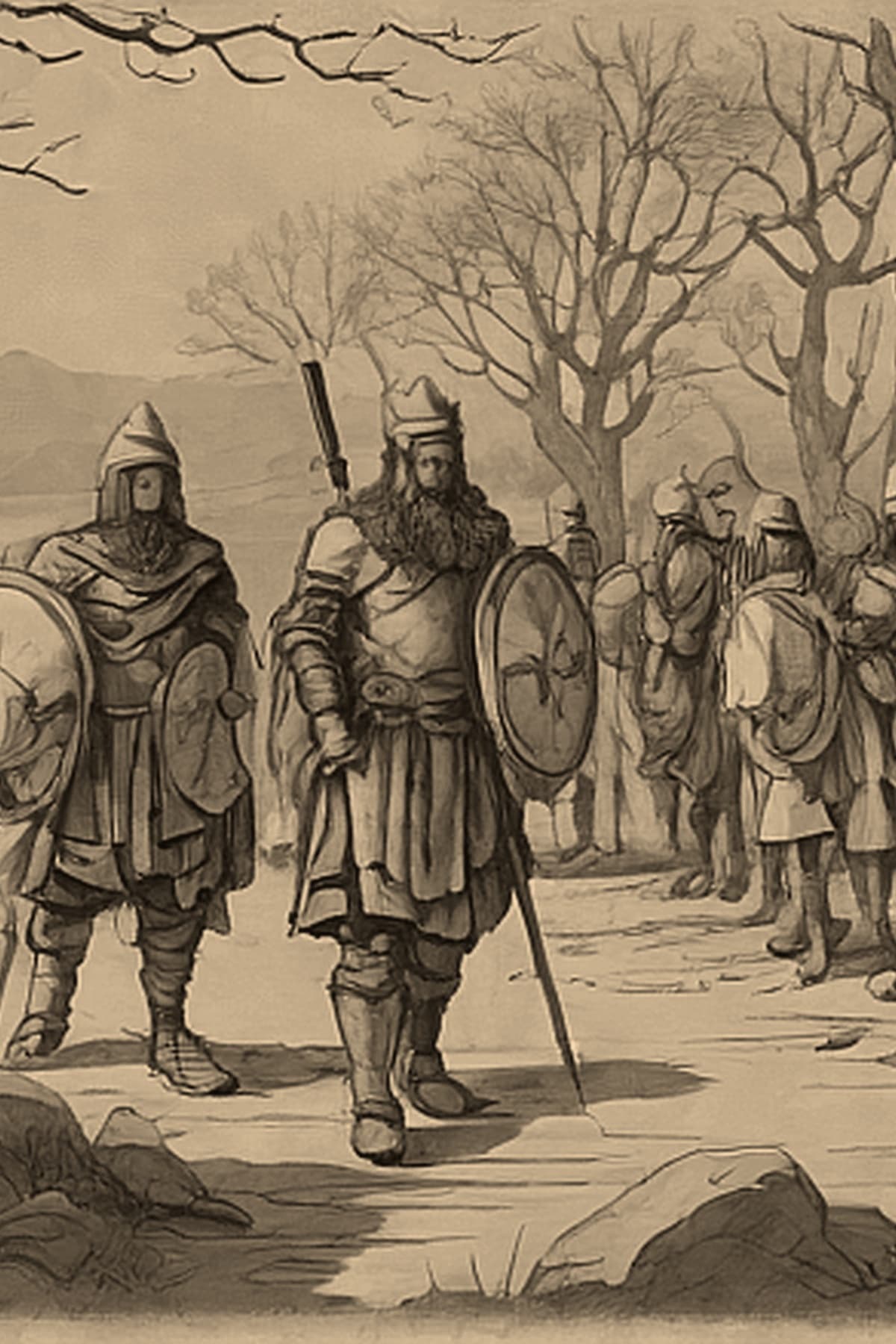
Part III
The Western Branch
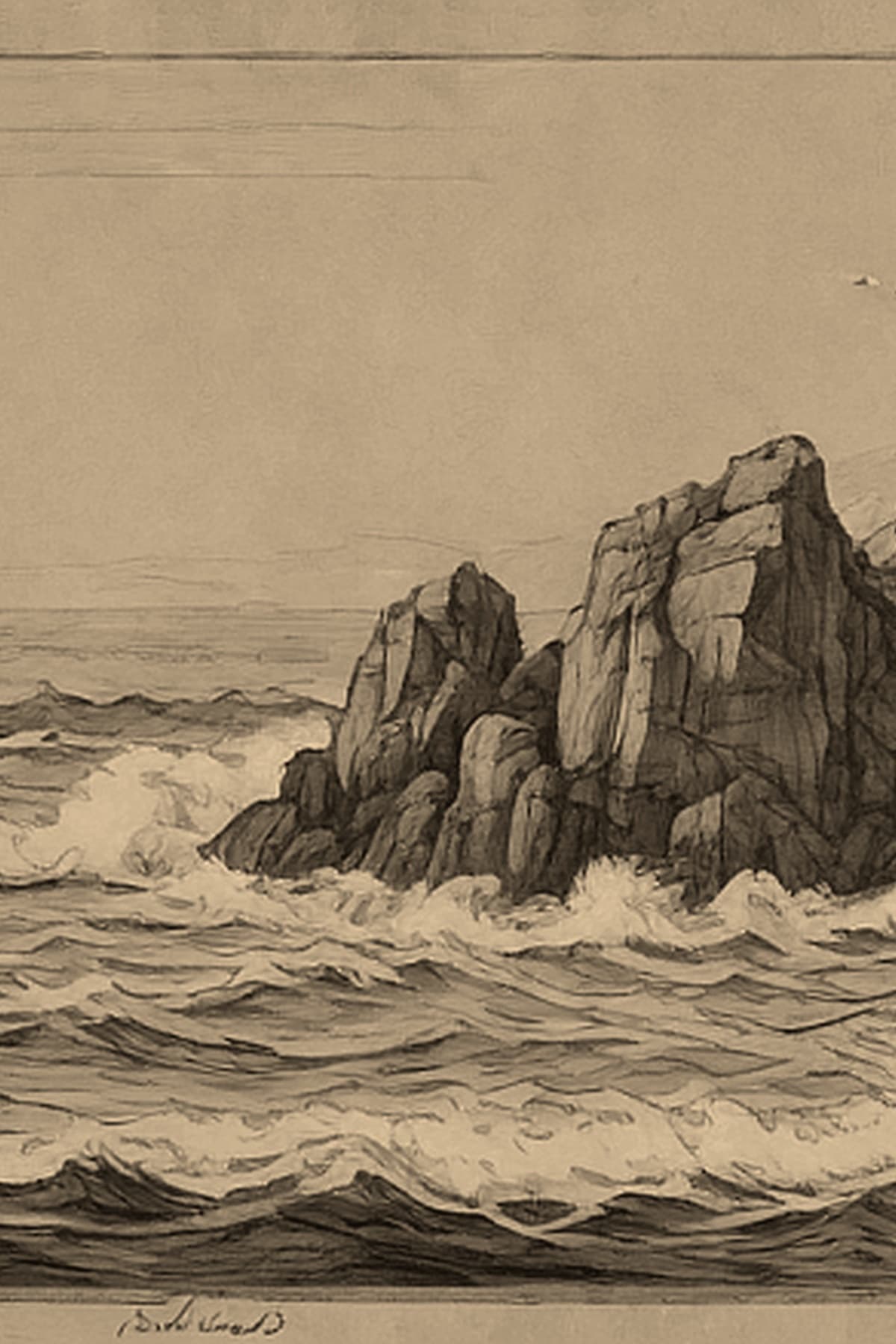
Part III
The Rathlin Dead
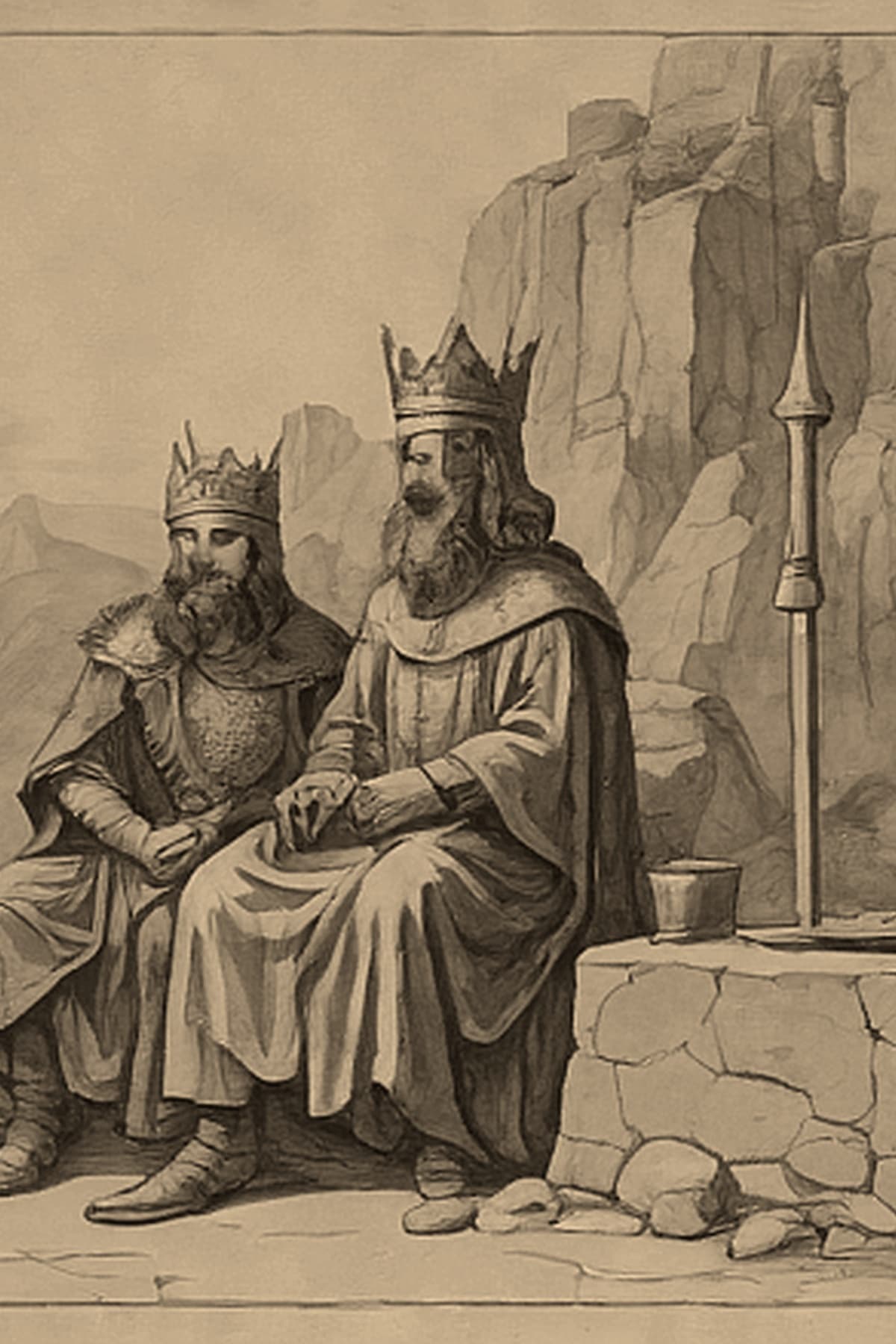
Part IV
The First Kings
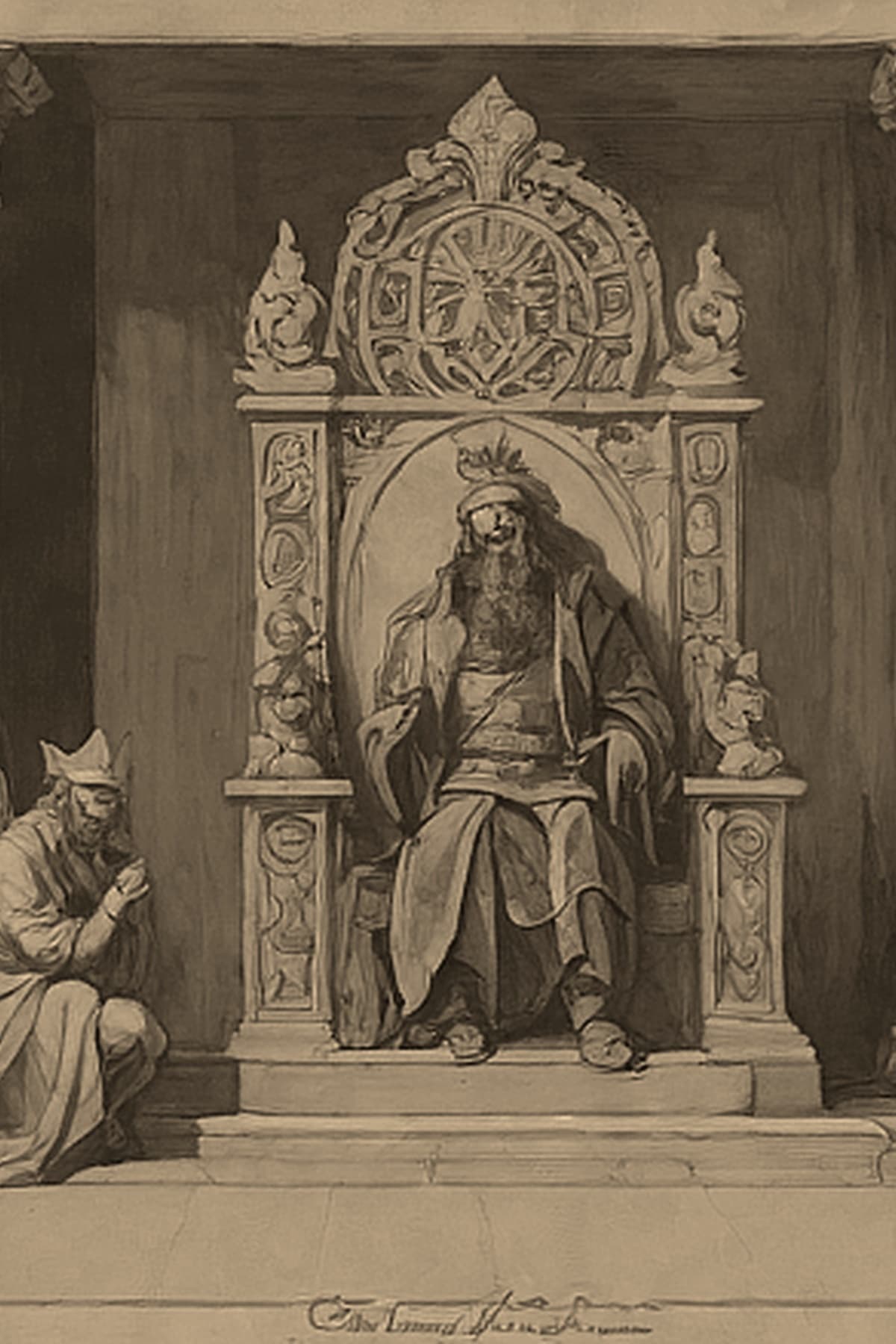
Part V
The Nine Hostages
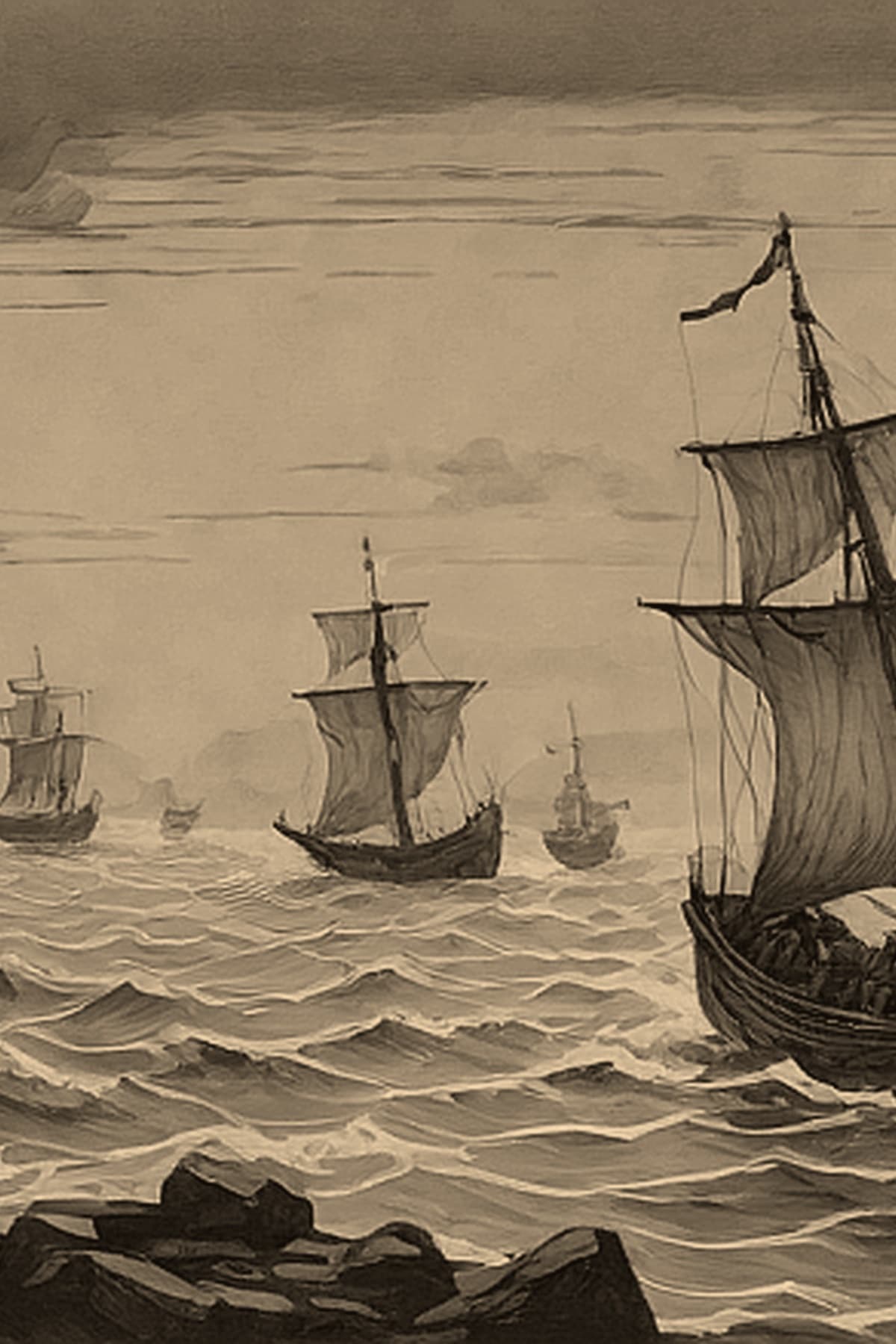
Part VI
The Crossing
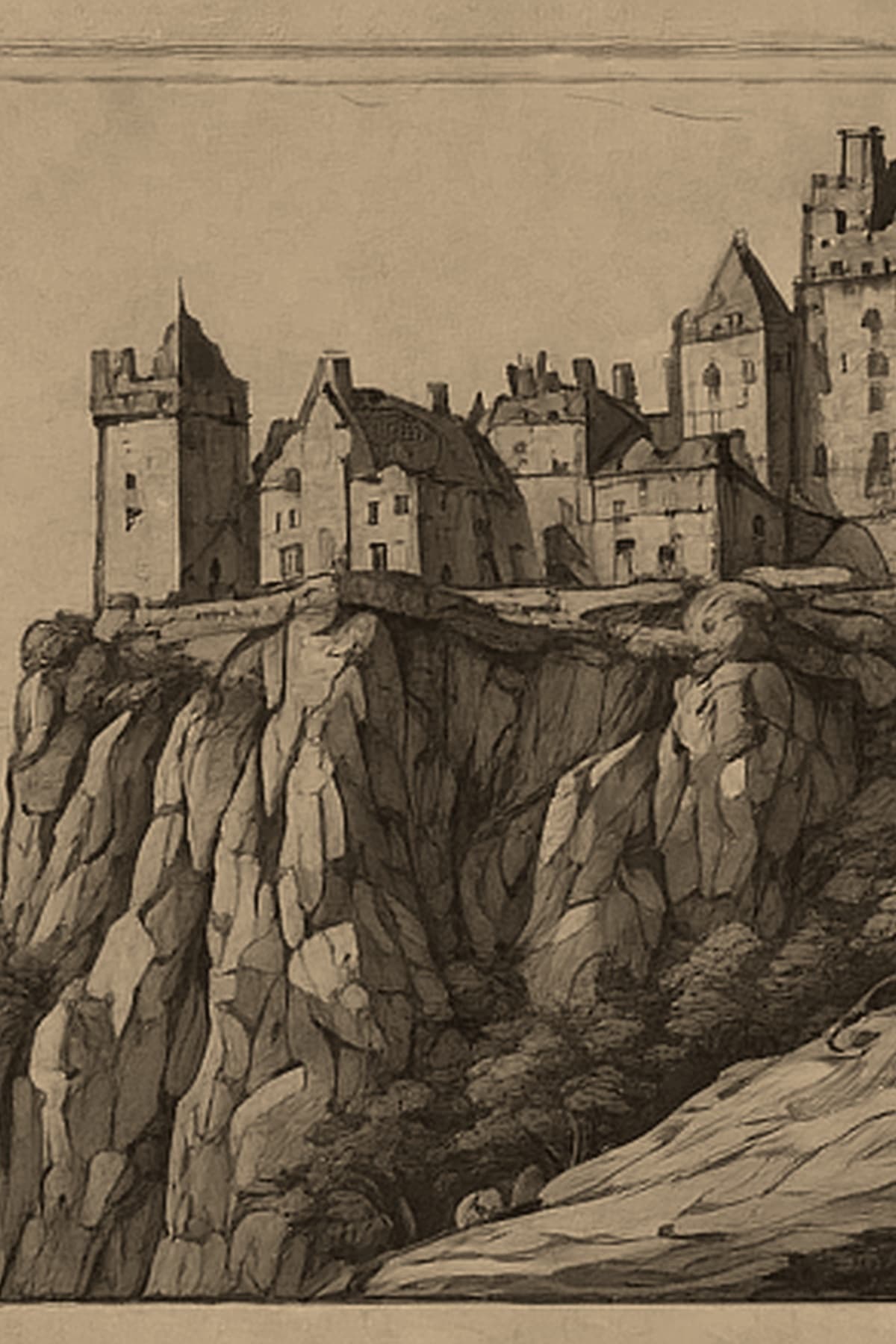
Part VII
House of Macbeth
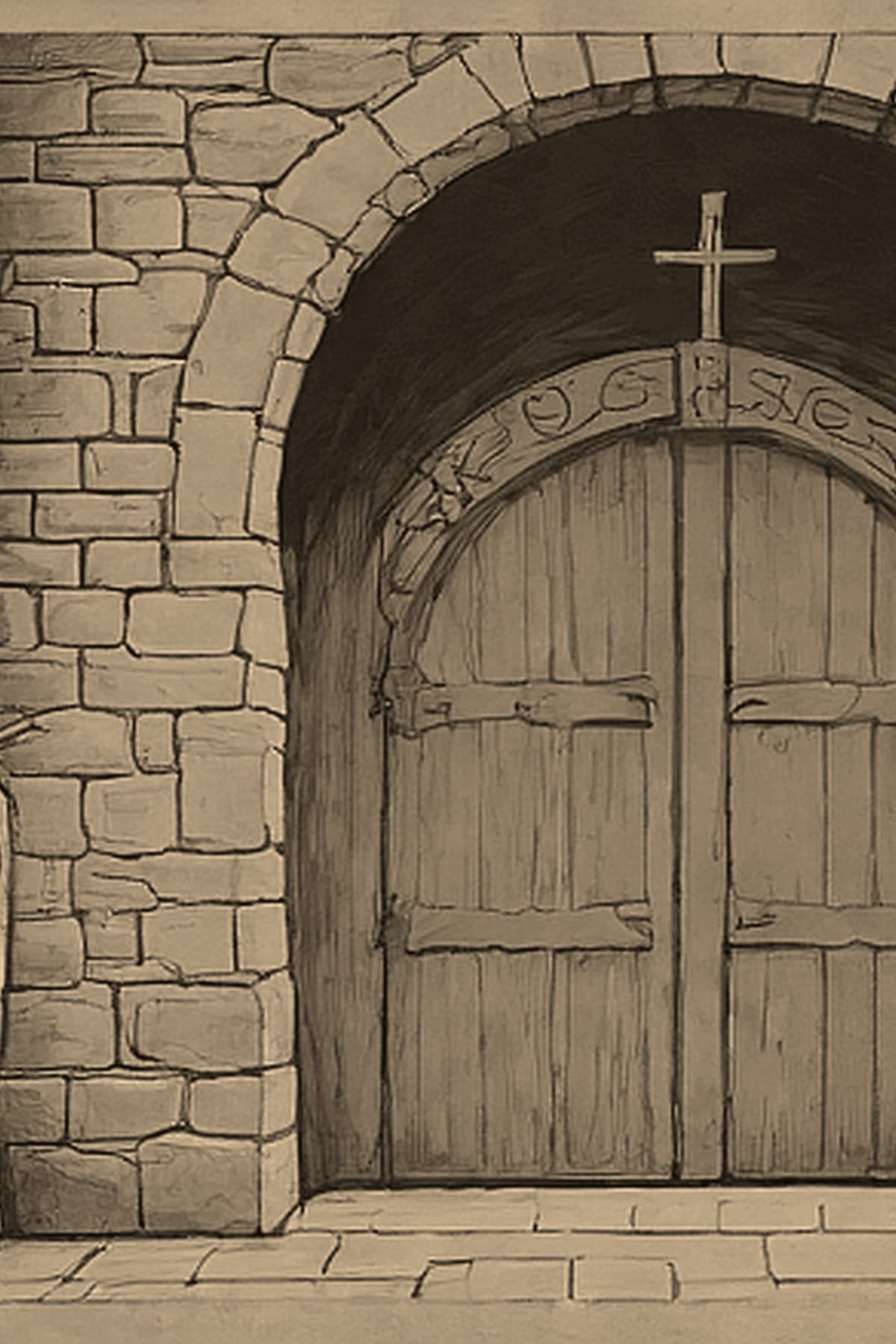
Part VIII
Son of the Priest
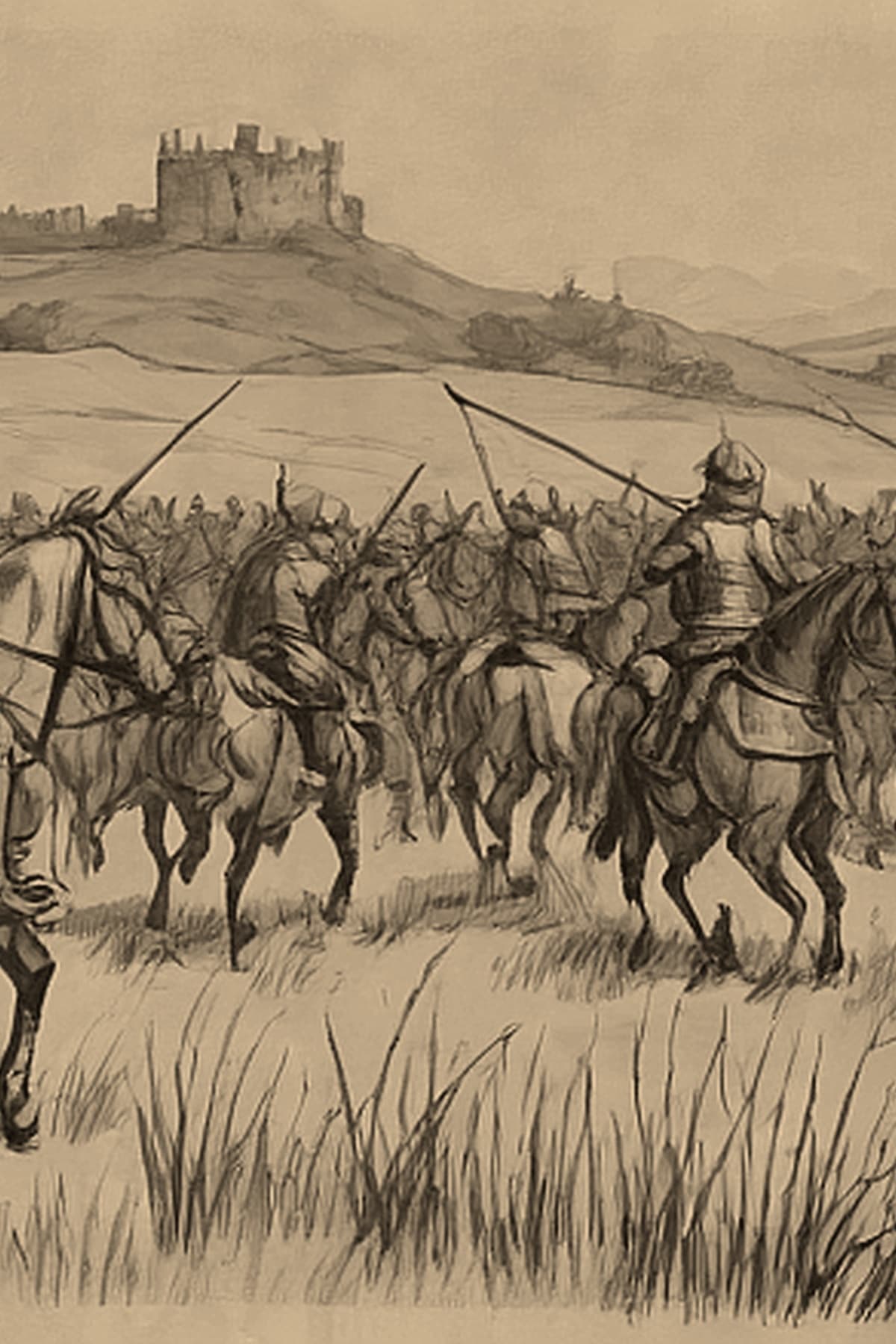
Part VIII
Bannockburn
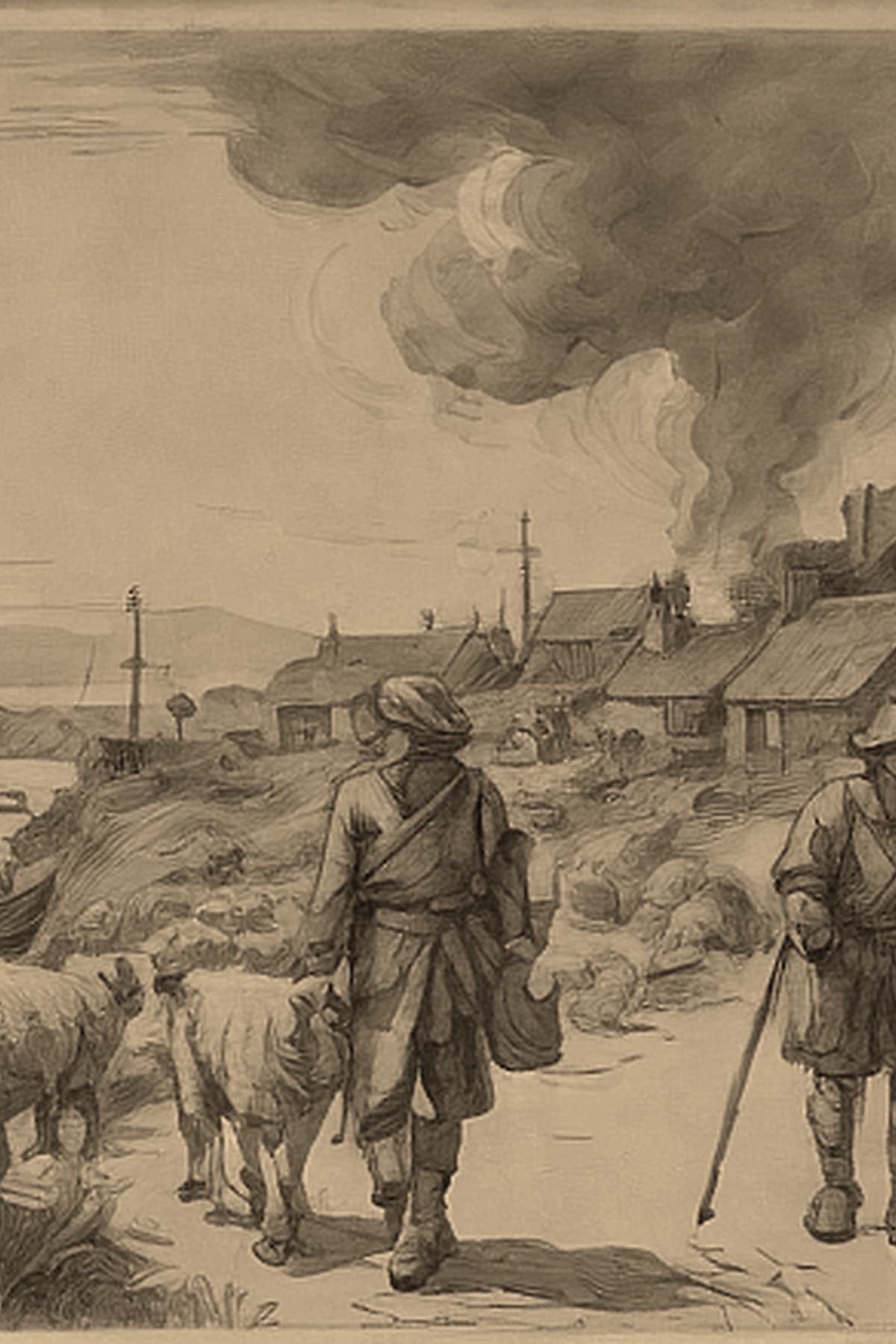
Part IX
The Scattering
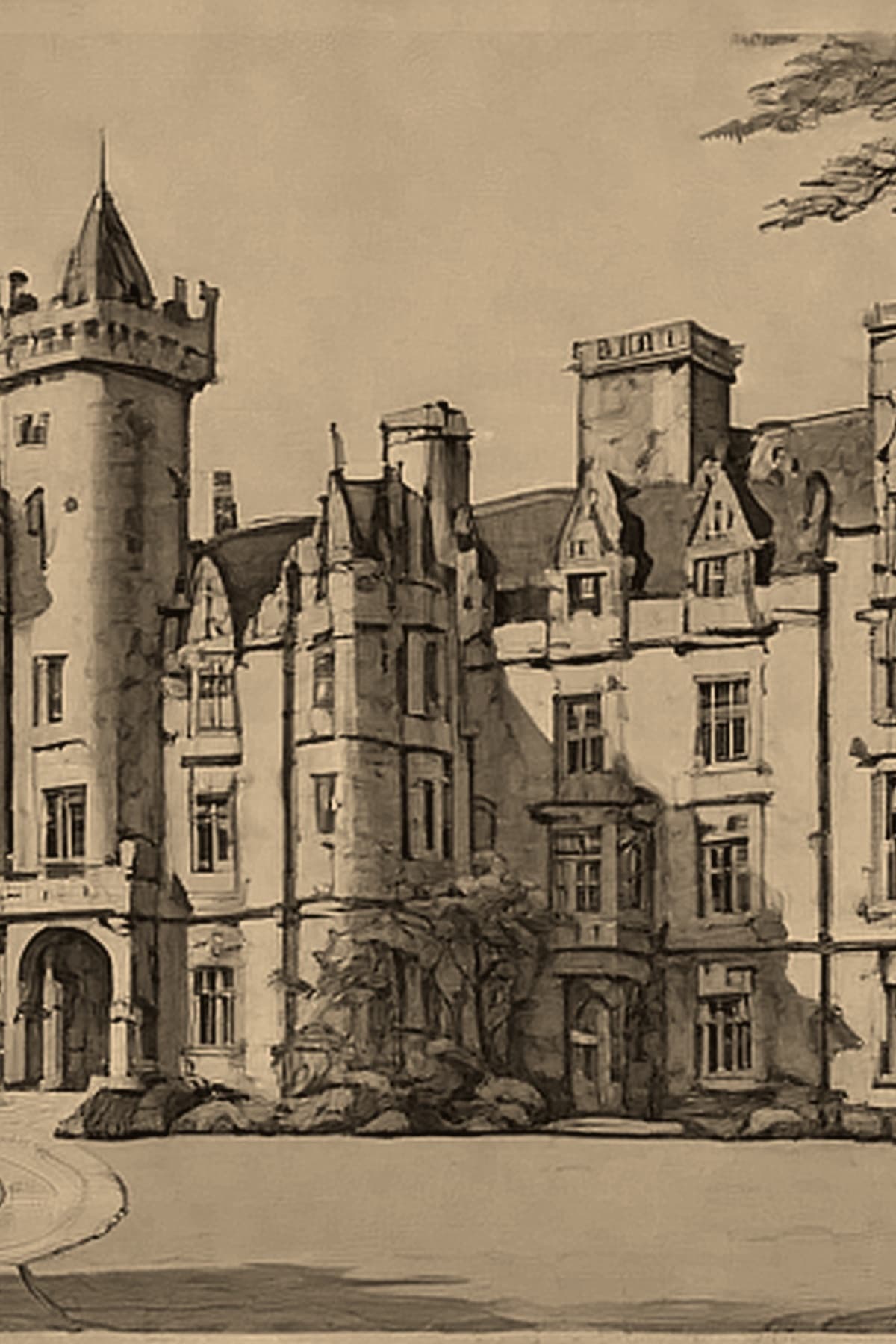
Part IX
Balnagown
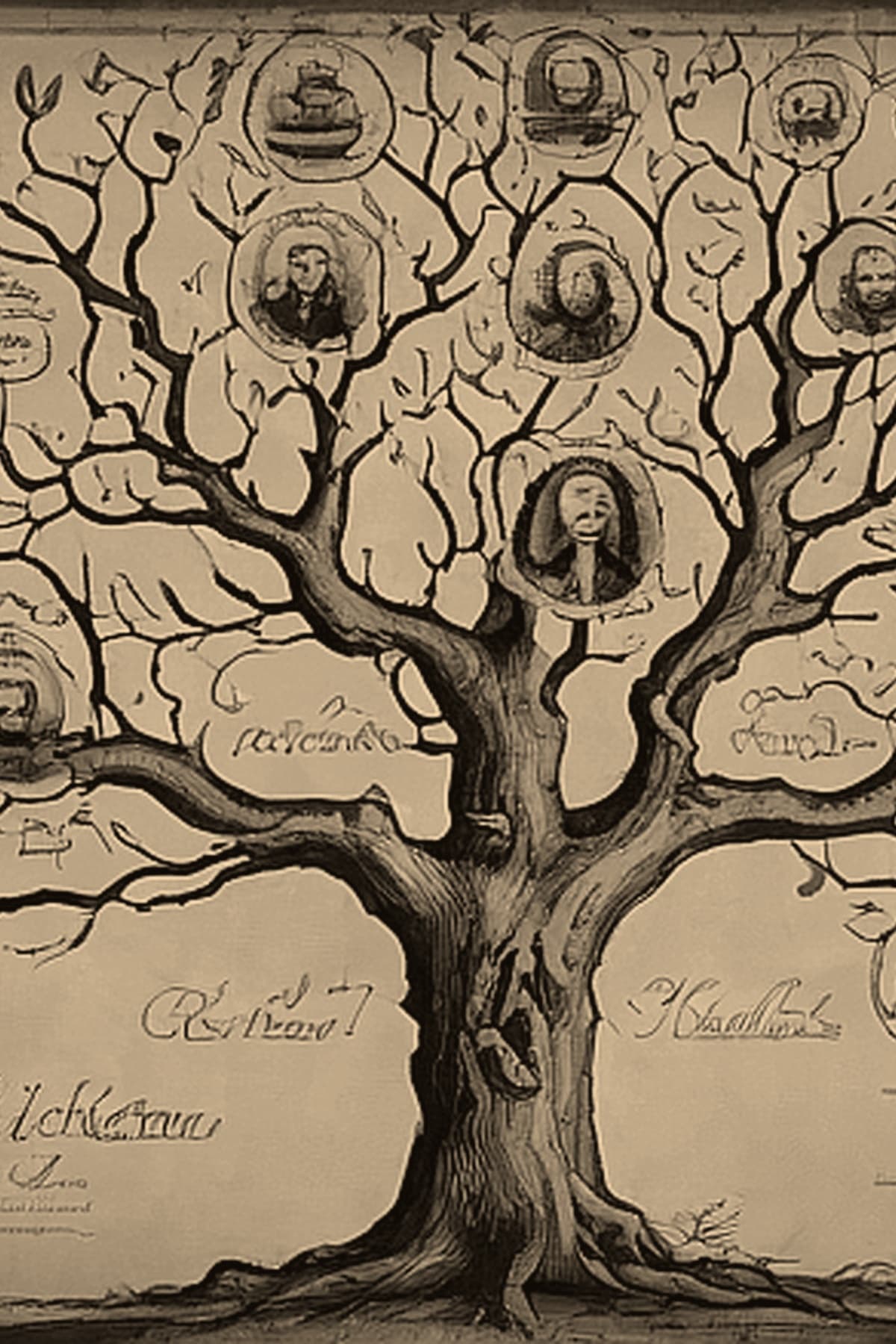
Part X
The Pattern
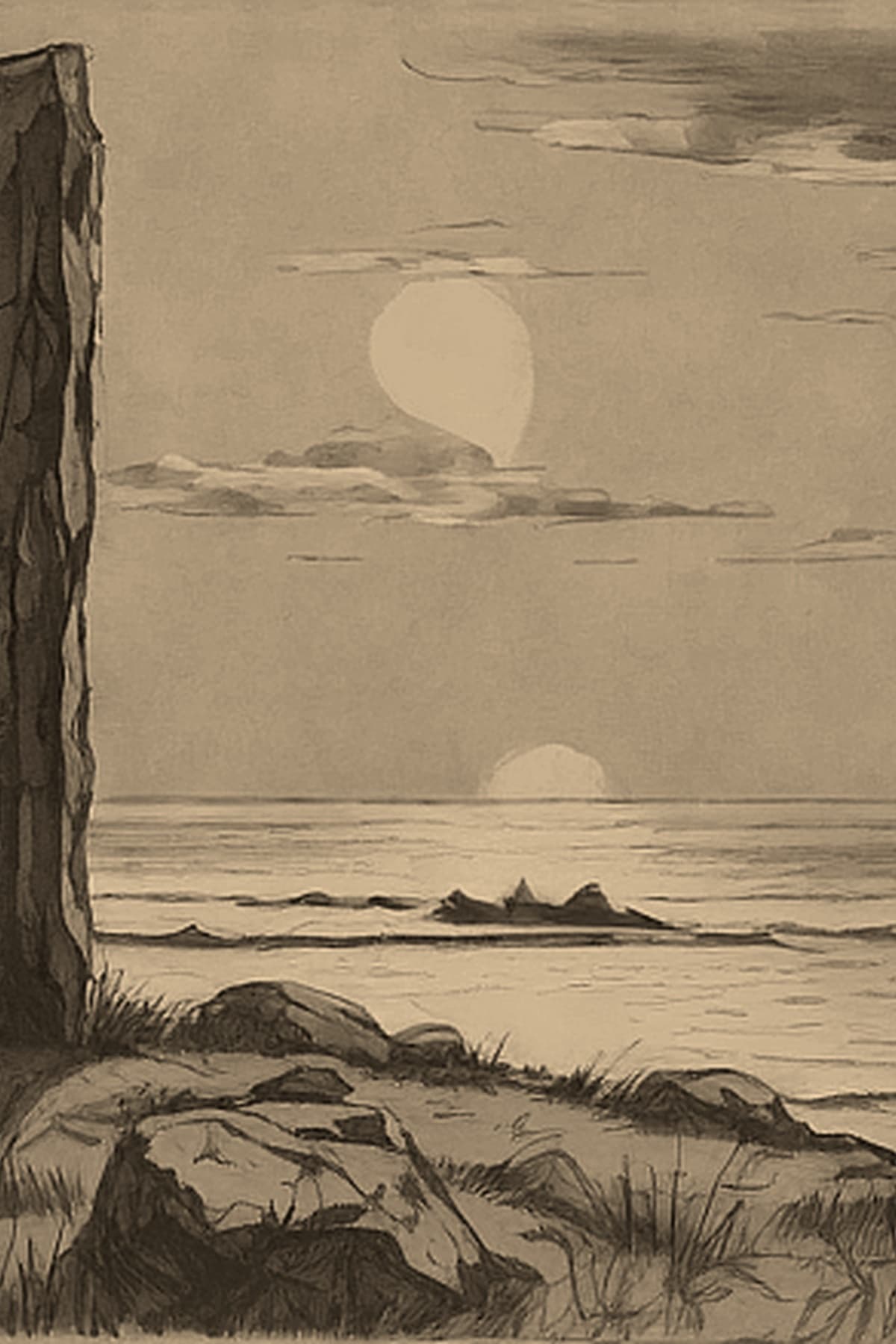
Epilogue
The Tongue, Healed
Maps
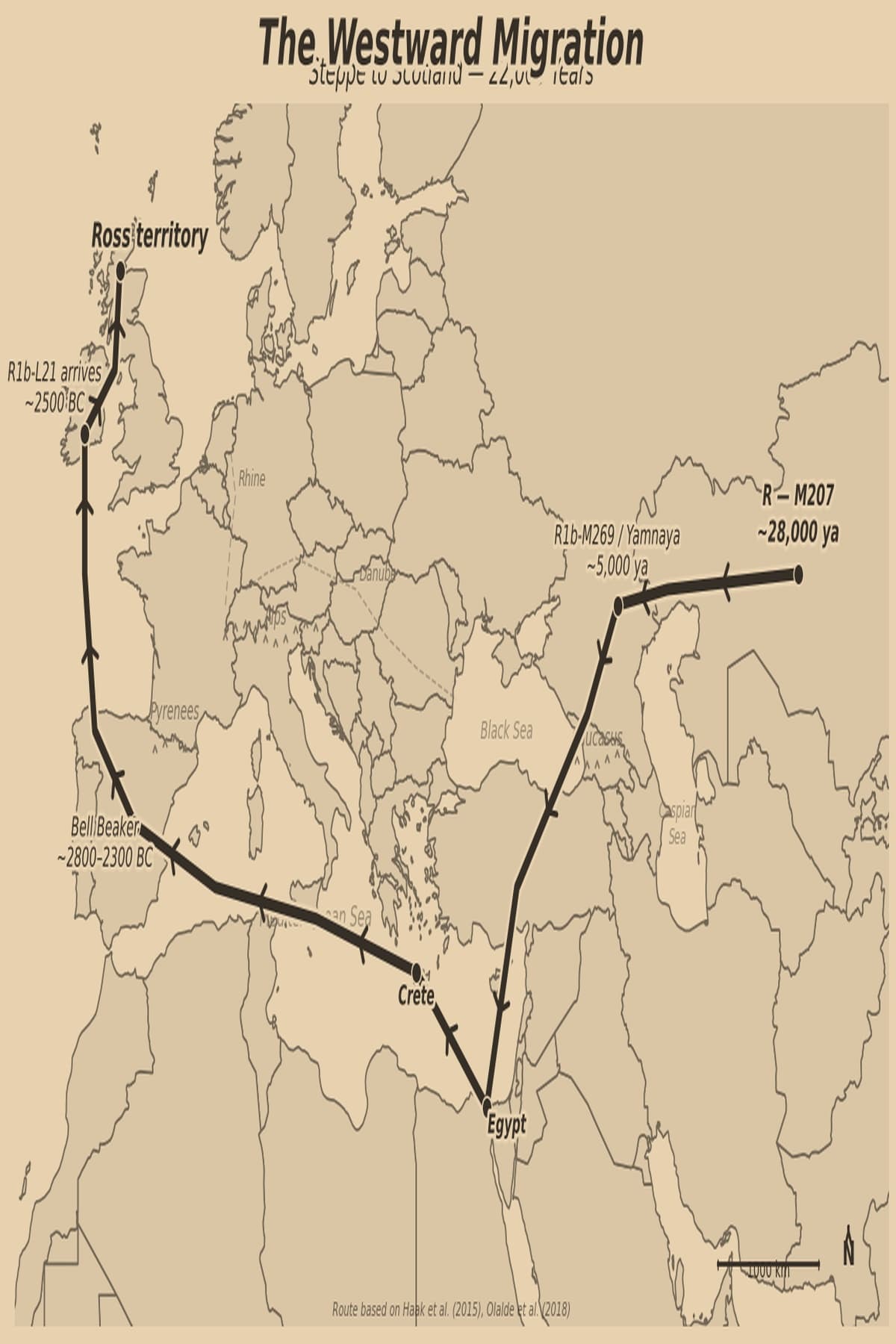
The Westward Migration — Steppe to Scotland
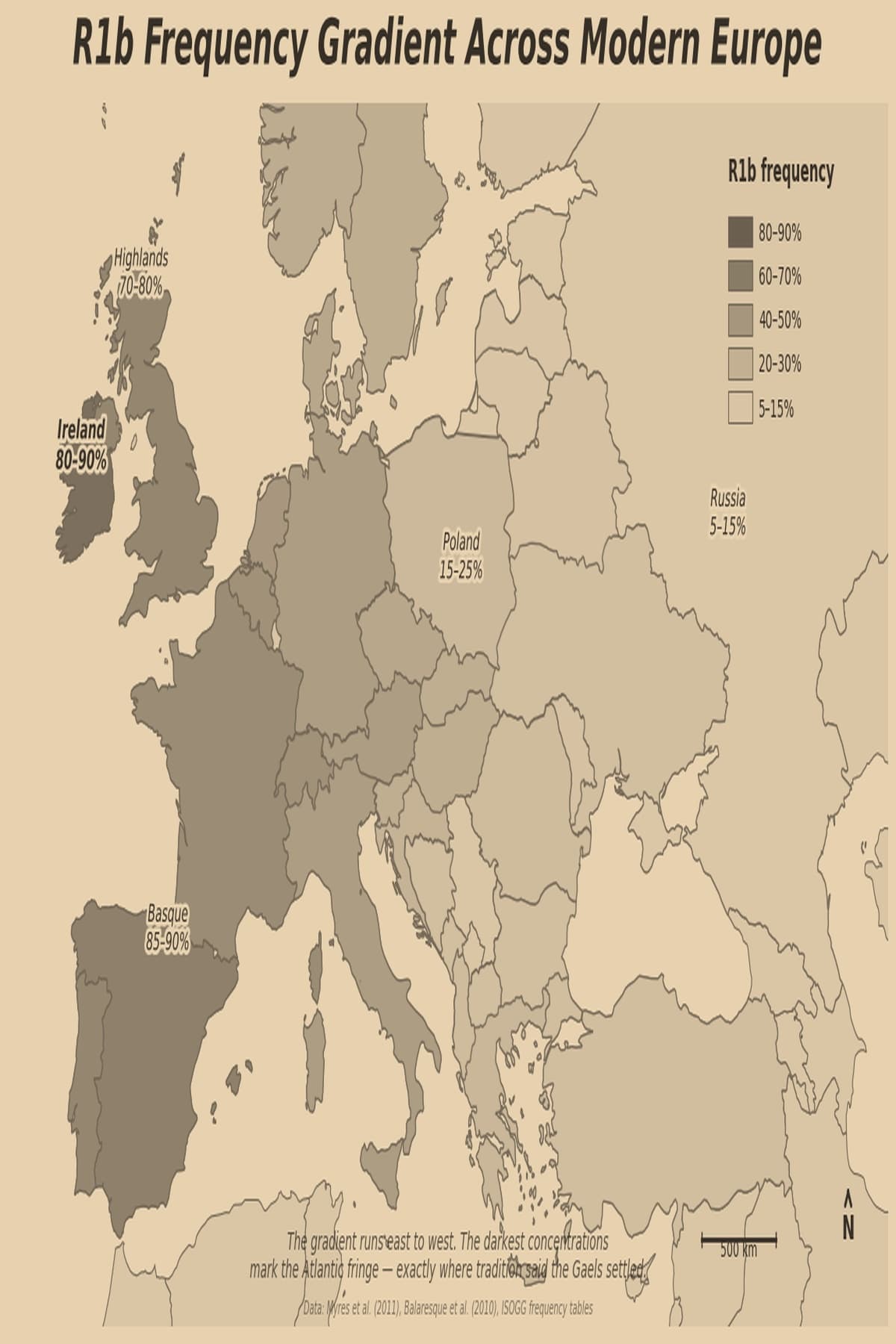
R1b Frequency in Western Europe
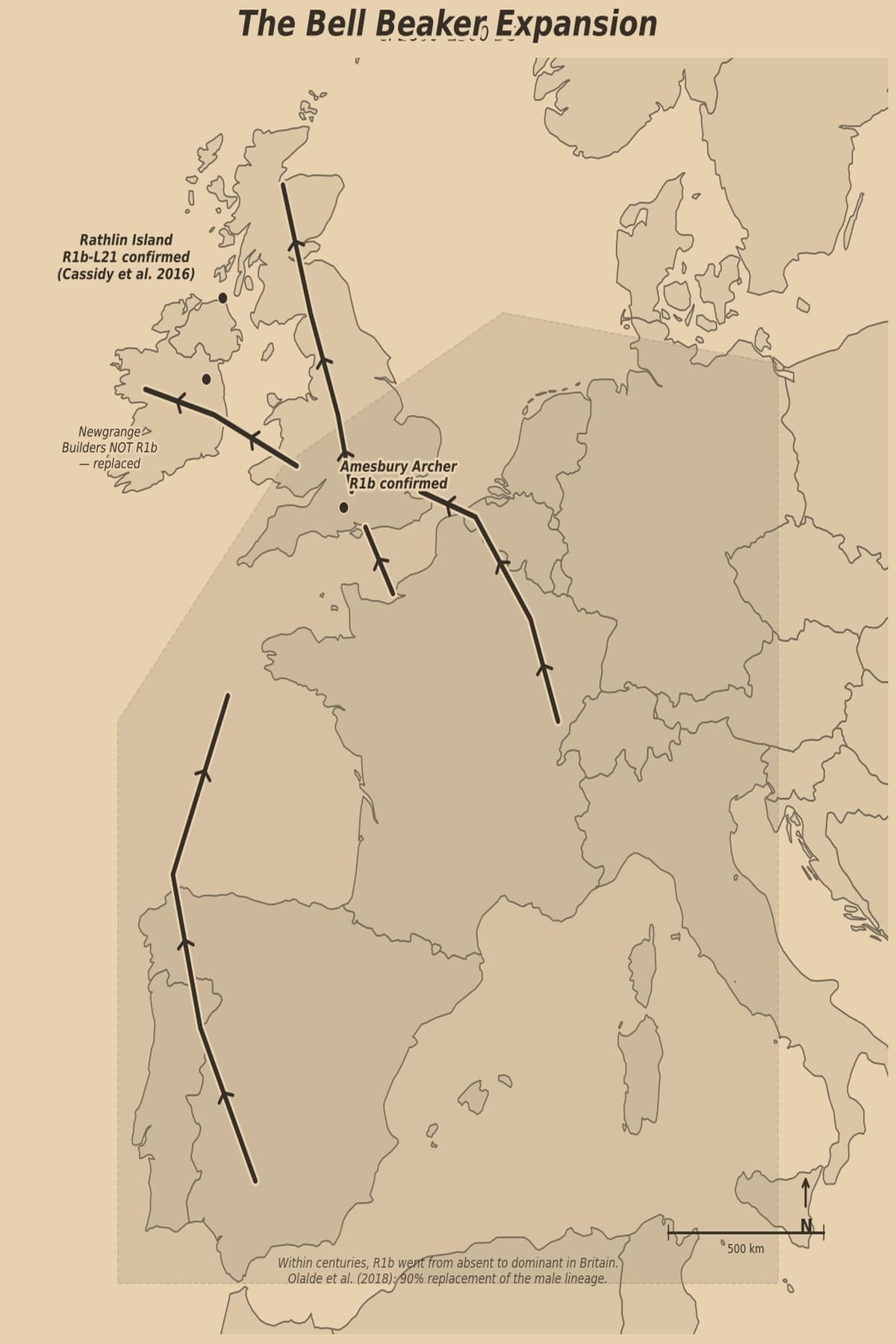
The Bell Beaker Expansion
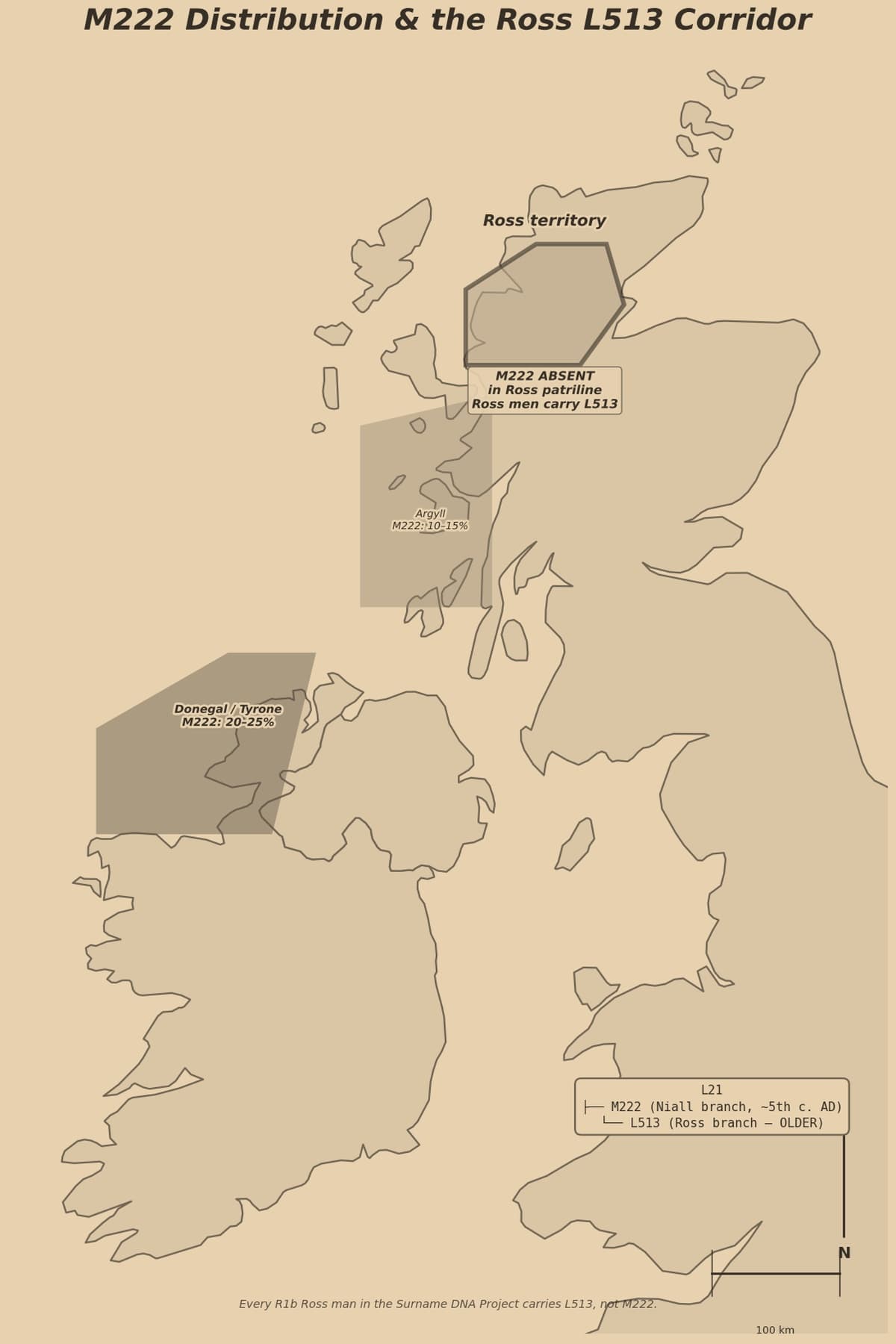
M222 Distribution — The Uí Néill Territory
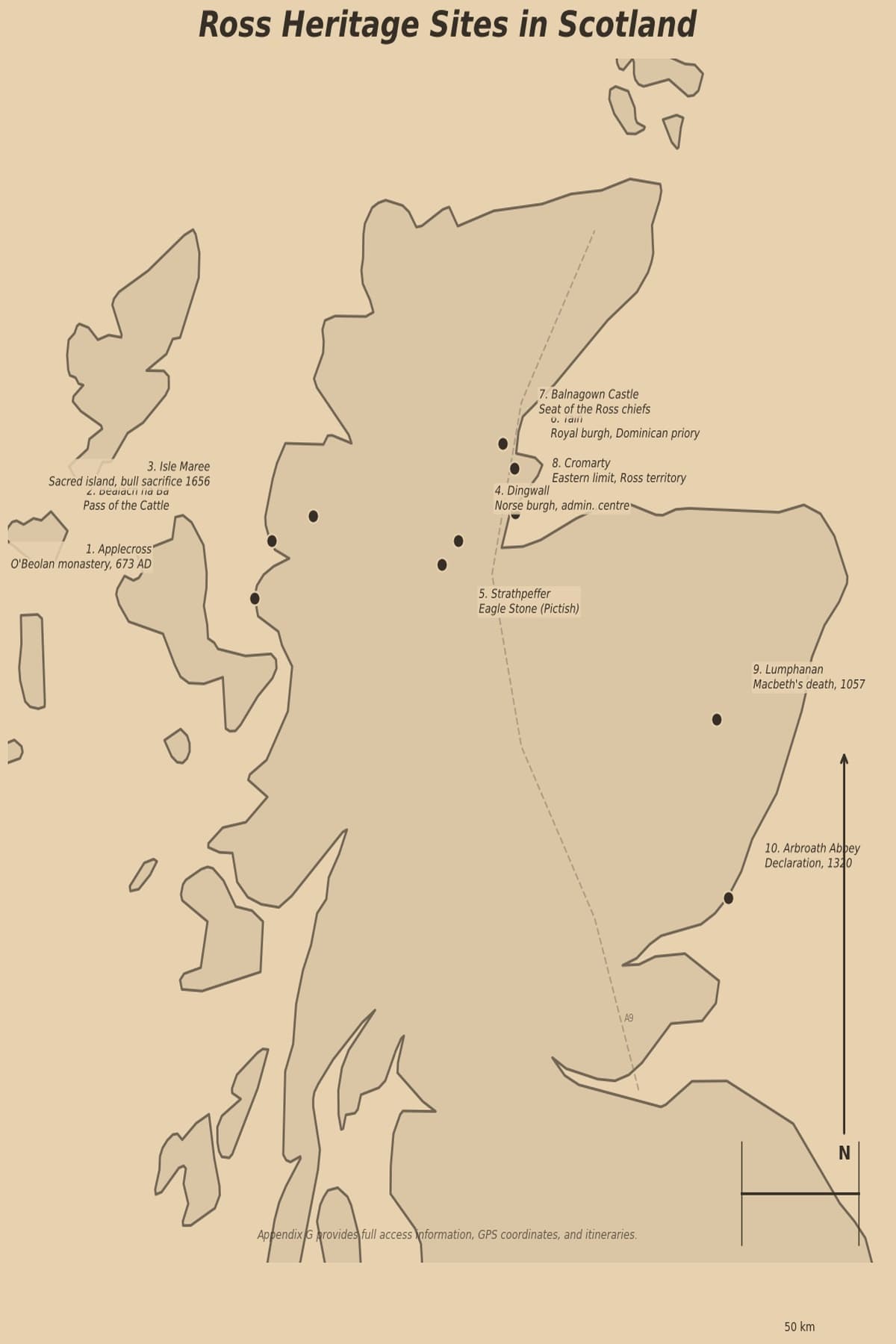
Clan Ross Heritage Sites
>Excerpt
From the Prologue: The DNA Kit
I am going to tell you something that no one has put together before. Not like this. Not all of it, end to end, with the receipts.
I am a direct descendant of the men who rode the Pontic-Caspian Steppe five thousand years ago — the ones who broke every civilisation they touched, who replaced the male lineage of Western Europe so thoroughly that their Y-chromosome now runs through over eighty percent of Irish men and nearly ninety percent of Welshmen and damn near every Highlander who ever drew a blade. I can prove it. Not with a family Bible. Not with a coat of arms on a pub wall. With a laboratory report from Valencia, Spain, dated six weeks after I scraped the inside of my cheek with a cotton swab and sealed it in a plastic tube and posted it back to a company called tellmegen.
The results came back as a string of eighteen characters: R1b1a1b1a1a1e1a2a1.
That string is a book. Twenty-two thousand years long. Each letter is a chapter. Each transition — from R to R1, from R1b to R1b1a — marks the moment a single man, somewhere on this earth, experienced a copying error in his Y-chromosome that passed to his sons, and their sons, and their sons, in an unbroken chain stretching from his campfire to my kitchen table.
I am going to decode that string. Letter by letter. Mutation by mutation. And when I am done, you will understand something that most people never learn about themselves: you are not who you think you are. You are older. You are stranger. You are more dangerous.
Part V · The Nine Hostages
The Niall Question: Are You a Descendant?
Niall of the Nine Hostages — the semi-legendary 5th-century High King of Ireland — is one of the most prolific patrilineal ancestors in recorded history. His Y-chromosome signature, M222, has been identified in an estimated 3 million men worldwide, concentrated in the O'Neill, McLaughlin, Gallagher, and other Uí Néill lineages of northwestern Ireland.
The Ross clan sits exactly where M222 appears at elevated frequency — in the territories settled by Dal Riata descendants. When James Ross tested, the result was decisive: rs11575897: GG. Ancestral state. No M222 mutation.
The Ross line is not a branch of Niall's dynasty. It is parallel to it — potentially older. The traditional genealogy has been saying this for centuries: the Rosses claim descent from the Senior Blood, the line of Loarn, elder brother of Fergus, who preceded the Uí Néill ascendancy. Part V of The Forge of Tongues contains the genetic proof, the traditional evidence, and the confidence assessment.
Genetic Marker
R1b-L21 (Atlantic Celtic)
The haplogroup of Ireland, Scotland, Wales, and Brittany — the populations that built the hillforts, spoke the Celtic languages, and painted themselves blue at Hadrian's Wall.
M222 Status
Negative — Not Uí Néill
The Ross patriline diverged from the Niall branch before M222 occurred. An older line. The Senior Blood the tradition describes.
Haplogroup String
R1b1a1b1a1a1e1a2a1
18 characters. 22,000 years. One unbroken patrilineal chain.
About the Author
James Ross Jr.
James Ross Jr. is a Strategic Systems Architect and enterprise software developer based in Dallas, Texas. By profession, he builds production software for founders and operators who need more than off-the-shelf tools. By lineage, he is a Ross of that Ilk — or close enough that the DNA requires an explanation.
The Forge of Tongues began as a personal project after a DNA kit arrived in the mail and returned a haplogroup he didn't expect. What started as curiosity about an 18-character string became a five-year investigation spanning molecular biology, medieval Gaelic literature, and eight centuries of documentary record.
The book is dedicated to George Ross Sr. — who carried the chain longest and did not live to see it decoded — and to Roman J. Ross, the next letter in the sequence.
Spem successus alit
Success nourishes hope
Clan Ross Motto
Plant Badge: Juniper
Territory: Ross-shire, Scotland
Earldom Created: 1215
Request a Copy
The Forge of Tongues is currently in its first edition. To request a manuscript copy, arrange a reading, or discuss the book's genealogical research, reach out directly.